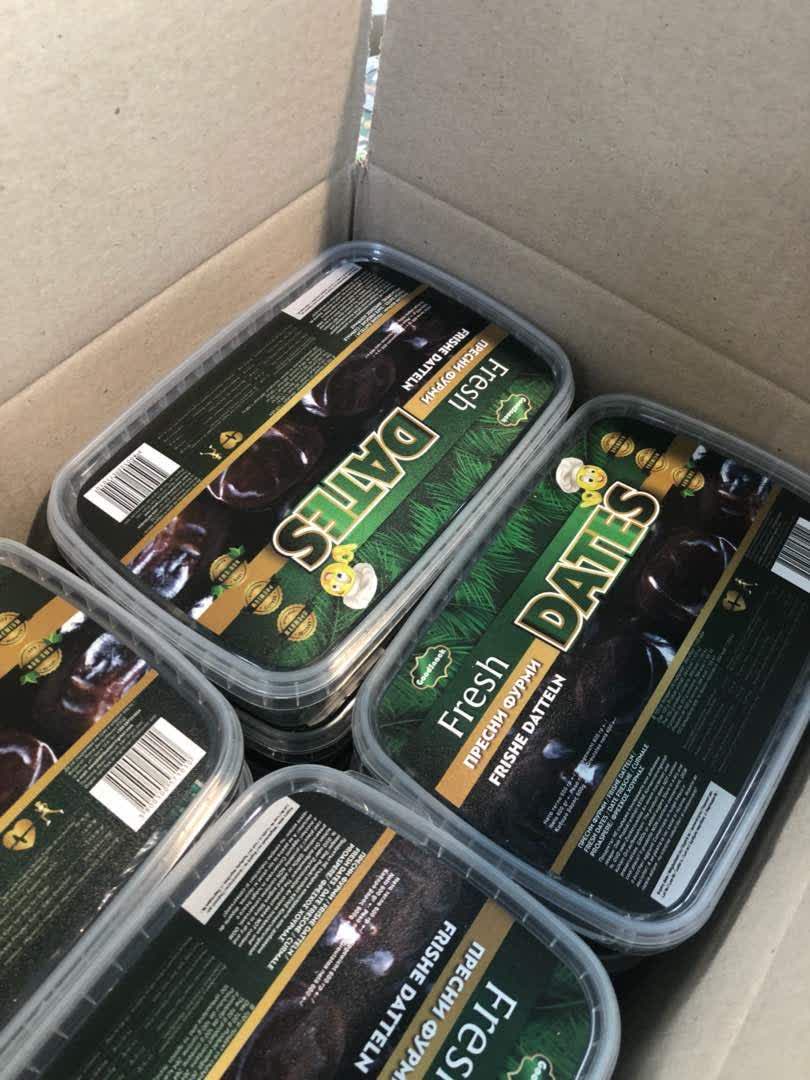
How to Import Iranian Dates: A Complete Guide for Importers
Iran is one of the world’s leading producers and exporters of premium-quality dates, and this guide on How to Import Iranian Dates will help you secure a reliable supply. With a diverse climate, centuries of cultivation experience and several internationally recognised date varieties, Iran is an attractive source for importers seeking consistent quality and competitive pricing. Among the most sought-after products, Mazafati dates from Bam stand out for their glossy dark colour, soft texture and rich, caramel-like flavour.
Whether you are an importer, food distributor, supermarket chain, wholesaler or private‑label brand, importing Iranian dates can expand your product range and margins. Successful importers, however, focus on more than price: they verify product quality, packaging and labelling, logistics and cold‑chain storage, and the correct export documentation to ensure smooth customs clearance and a steady supply.
This guide explains the complete importing process so importers can make informed purchasing decisions, avoid common mistakes and take practical next steps. Read on to learn how to select suppliers, choose packaging, manage transport and prepare required export documents.
Why Import Dates from Iran?
Iran ranks among the world’s largest date-producing countries and remains a reliable source for international buyers seeking a broad selection of premium date varieties. Its production serves markets across Europe, Asia, the Middle East, North America and other regions, supported by established exporters and growing global demand.
Importers choose Iranian dates because they typically deliver a combination of tangible advantages:
- Consistent product quality—clear grading, regular quality inspections and available certificates (e.g. COA, phytosanitary when required)
- Competitive price points versus many other sources, especially for bulk orders
- A wide range of varieties (fresh and semi‑dry) suitable for retail, processing and gift markets
- Strong production volumes and regional specialities that support steady supply throughout the year for different markets
- Flexible packaging and private‑label options to meet buyer specifications
- Established export infrastructure that simplifies international shipping and documentation
Many buyers prefer to source directly from manufacturers and exporters to reduce intermediaries, improve margins and secure reliable supply. Example: a supermarket chain might source Mazafati for a premium fresh range while a food processor opts for semi‑dry varieties for ingredient use.
Popular Iranian Date Varieties
Understanding the main Iranian date varieties helps importers match product types to target markets, packaging and shelf‑life requirements.
Mazafati Dates
Mazafati dates are Iran’s best‑known fresh variety, grown predominantly around Bam. They are noted for a glossy dark colour, very soft texture and a rich, caramel‑like taste. Because Mazafati have higher natural moisture content than many semi‑dry types, they demand careful handling and a maintained cold chain from packhouse to point of sale.
They are ideal for:
- Supermarkets and premium retail lines (fresh displays)
- Hotels and food‑service where fresh fruit quality is essential
- Luxury gift packaging and seasonal promotions
- Fresh fruit distributors who can maintain refrigerated supply
Buyer use‑case examples: a supermarket chain stocking 200–500 g retail trays for immediate sale; a distributor supplying refrigerated pallets for high‑end hotels. (Check moisture limits and recommended storage temperatures with your supplier.)
Piarom Dates
Piarom — often described as a “luxury date” — has a thinner dark skin, firmer bite and lower moisture content than Mazafati, giving it a longer shelf life. Its refined sweetness and attractive appearance make it popular in premium export markets and health‑food segments.
Buyer use‑case examples: retail gift boxes, health‑food retailers and e‑commerce packs where a firmer texture and extended shelf life are required.
Zahedi Dates
Zahedi dates are a semi‑dry type with low moisture content and a firm, drier texture. Their stability makes them suitable for long‑distance shipments, bulk export and industrial food processing (e.g. paste and ingredients).
Buyer use‑case examples: food processors sourcing ingredient‑grade dates, or exporters consolidating bulk cartons for distant markets where long shelf life is essential.
Rabbi Dates
Rabbi dates sit between fresh and semi‑dry types: they are semi‑dry with pleasant sweetness and good shelf life, making them versatile across markets. They are commonly exported to Asian and European destinations where both retail and industrial uses exist.
Buyer use‑case examples: retailers who want a long‑lasting retail pack and manufacturers seeking a stable ingredient with consistent taste and colour.
Choosing the Right Supplier
Selecting a reliable supplier is one of the most important decisions when importing dates. Price alone should not drive your choice — insist on demonstrable quality, export experience and traceable product origin so you secure a consistent supply of dates that meet your market requirements.
A professional exporter should provide:
- Consistent product quality with clear grading and Certificates of Analysis (COA)
- Modern processing and packing facilities that follow food‑safety standards (HACCP/ISO where available)
- Proper grading, sorting and size classification to match your retail or bulk specifications
- Good hygiene and documented quality‑inspection procedures
- Complete export documentation and experience with international shipping (B/L, AWB, phytosanitary certificates when required)
- Cold storage and temperature‑controlled handling for moisture‑sensitive varieties
- Flexible packaging options and private‑label capability to meet market‑specific needs
- Responsive communication and reliable after‑sales support
Before placing a large order, always request product specifications, high‑resolution photos, COA, packaging details and physical samples. Requesting these items will reduce risk and help verify the supplier’s claims about quality and origin.
Understanding Quality Standards
Premium dates should be carefully graded and sorted before export so size, colour, texture and overall appearance are consistent with your product specification.
When evaluating suppliers, ask about these specific items:
- Harvest season and origin — confirm the growing region for each variety
- Product grade and accepted tolerances (size, blemishes, foreign matter)
- Moisture level / moisture content and how it is measured
- Size classification and packing counts (e.g. pieces per 200 g/500 g/1 kg)
- Declared shelf life and recommended storage conditions
- Cold storage capacity and temperature‑controlled logistics for moisture‑sensitive types
- Quality inspection procedures and third‑party testing where applicable
Practical procurement checklist (ask your supplier): sample pack, COA, packing list, photos of cartons and pallets, cold‑chain certificates (if required) and references from existing importers. Request samples and COA before committing to LCL or FCL orders — this small step often prevents costly quality or supply issues down the line.
Packaging Options for International Buyers
Packaging protects dates in transit and helps your product meet the expectations of different markets. Choosing the right packaging depends on your target customers, sales channels and branding strategy — bulk for processors and wholesalers, retail packs for supermarkets, and private‑label solutions for brand owners.
Bulk Packaging
Bulk packaging suits wholesalers, food manufacturers and distributors who repack or use dates as an ingredient. It is cost‑efficient and designed for easy palletisation and container loading.
Typical bulk packaging includes:
- 5 kg cartons (common for repacking)
- 10 kg cartons (standard for bulk retail supply)
- Custom export cartons sized for pallet and container efficiency
- Industrial sacks or lined cartons for food‑processing customers
When ordering bulk, specify desired weight, carton dimensions and packaging material (kraft, lined corrugate, food‑grade liners). Ask your supplier for container loading estimates (how many 10 kg cartons per 20′ container) — verify these figures before finalising the order.
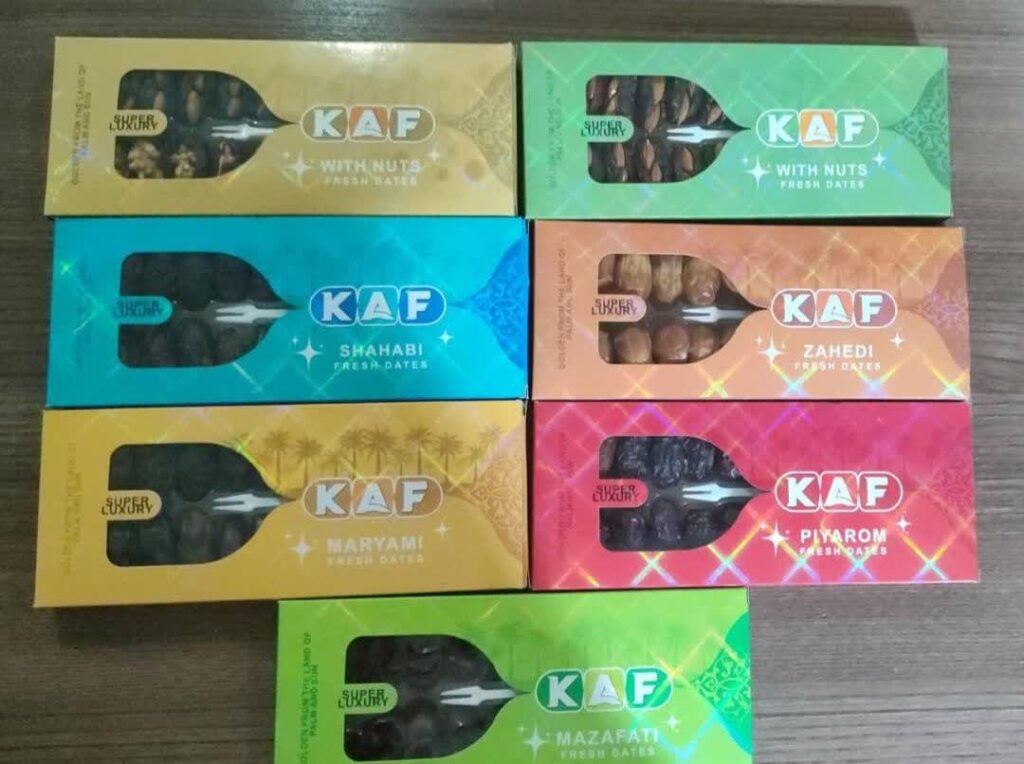
Retail Packaging
Retail‑ready packaging is designed for supermarkets, grocery stores and specialty food retailers. Attractive retail packs protect product taste and colour, display nutritional information and comply with local labelling rules.
Common retail sizes include:
- 200 g — impulse and single‑serve retail
- 400 g — small family packs
- 500 g — premium retail trays and gift packs
- 600 g — larger retail trays
- 1 kg — family packs or economy retail
Materials and finishing matter: consider clear film trays, modified‑atmosphere packaging (MAP) for moisture‑sensitive types, tamper‑evident seals and multilingual labels for export markets. Always check local labelling requirements (e.g. EU/UK food labels) before printing.
Private Label Packaging
Private label packaging allows importers to sell under their own brand and is ideal for supermarket chains, distributors and premium brands. A capable exporter will offer end‑to‑end private label services from design to printing and barcoding.
A professional exporter should be able to provide:
- Custom packaging design and mock‑ups
- Printed cartons, labels and branded inner trays
- Barcode printing and regulatory labelling (multilingual where required)
- Flexible packaging sizes and bespoke weight options
- Market‑specific compliance support and sample approvals
Decision guide: choose bulk if you are repacking or need cost‑effective ingredient supply; choose retail packs for direct‑to‑consumer sales; choose private‑label packaging when you want to build brand recognition. Request a packaging mock‑up and sample to confirm taste, colour and presentation before placing a full order.
Cold Storage and Shelf Life
Proper storage and temperature control are essential to preserve the freshness, texture and overall quality of dates throughout the supply chain.
Mazafati dates have a higher natural moisture content than many semi‑dry types, so they are particularly sensitive to temperature and relative humidity. To maintain product quality and extend shelf life, the cold chain should be used wherever practical, from packhouse through transportation to the importer’s warehouse.
Professional exporters and packers typically use modern cold storage and refrigerated handling to preserve freshness prior to shipment.
Recommended storage and handling practices include:
- Refrigerated storage for moisture‑sensitive varieties — keep product at controlled temperatures while in packhouse and warehouse
- Temperature‑controlled transportation (reefer containers) for long shipments to protect texture and taste
- Clean, hygienic warehouse conditions and food‑grade packaging to prevent contamination
- Protection from direct sunlight and excessive humidity during storage and at retail
These measures help extend shelf life and ensure customers receive dates in excellent condition. (If you plan to include precise temperature or relative‑humidity targets in buyer documentation, verify the exact ranges with your supplier and cold‑storage provider.)
Shipping Methods
Choose the shipping method that best matches order size, delivery urgency and destination. Each option affects transit time, cost and the level of cold‑chain control required.
Sea Freight
Sea freight is the economical choice for most commercial exporters and importers when shipping large quantities. For moisture‑sensitive dates, refrigerated (reefer) containers maintain a consistent temperature and help protect product quality during long voyages.
Advantages of sea freight include:
- Lower transportation costs per kg for bulk orders
- Suitability for full container loads (FCL) and palletised shipments
- Good option for wholesalers and distributors buying at scale
- Cost‑effective for long‑distance export when lead time allows
Sea freight typically takes longer than air, so factor in transit time when planning shelf life and ordering frequency. For refrigerated shipments, confirm container availability and required reefer set‑points with your supplier and freight forwarder.
Air Freight
Air freight is appropriate for urgent deliveries, high‑value or smaller shipments and initial sample orders. It shortens transit time and reduces exposure to fluctuating conditions in transit.
Benefits of air freight include:
- Faster delivery and reduced transit time
- Ideal for sample orders and urgent restocks
- Useful for premium retail products where speed to market preserves taste and appearance
- Lower inventory carrying time and quicker product rotation
Air freight is more expensive, so use it strategically — for example, to test new varieties in your market or to replenish fast‑moving retail lines. For larger, routine supplies, sea freight with proper reefers usually gives the best cost‑to‑quality balance.
Export Documentation
Accurate export documentation is essential for smooth customs clearance and compliance with destination‑country regulations. Different markets require different paperwork, so confirm document requirements with your importer and freight forwarder before shipment.
Typical export documents and quick notes for importers:
- Commercial Invoice — issued by the exporter; includes product description, unit price, total value and Incoterms. Needed for customs valuation.
- Packing List — details carton counts, weights and pallet configuration; used by customs and logistics partners to verify cargo.
- Certificate of Origin — verifies country of origin; issued by the exporter or a local chamber of commerce and often required for preferential tariff treatment.
- Phytosanitary Certificate — required by some destinations to confirm produce meets plant‑health standards; issued by the competent authority in the exporting country.
- Bill of Lading (sea) or Air Waybill (air) — the main transport document issued by the carrier; needed to release cargo at destination.
- Certificate of Analysis (COA) / Quality Report — shows moisture content, microbiological results and other quality parameters; request this for moisture‑sensitive varieties.
- Other documents — depending on the importing country: health certificates, fumigation certificates, export licences or additional lab tests. Always verify with your customs broker.
Practical notes: ask your supplier who issues each document, expected lead times (some certificates take days to arrange) and any associated costs. Working with experienced exporters and a knowledgeable freight forwarder reduces the risk of delays at destination.
Common Mistakes to Avoid
Many importers focus on price alone and overlook operational risks. The following common mistakes can lead to quality issues, customs delays or unexpected costs.
To reduce risks, avoid these pitfalls and take the recommended mitigation steps:
- Choosing suppliers based only on the lowest price — mitigation: request references, visit (or commission a third‑party audit) and verify certifications.
- Not requesting product samples before ordering — mitigation: obtain and test samples for taste, texture, moisture content and shelf life.
- Ignoring packaging quality — mitigation: request photos, carton specs and a packaging mock‑up to confirm protection, presentation and label compliance.
- Overlooking storage and transportation conditions — mitigation: confirm cold‑chain capability, reheater/reefer settings and container type for your route.
- Failing to verify export experience — mitigation: ask for export history, previous destinations served and feedback from other buyers.
- Not confirming required documentation — mitigation: check destination country requirements in advance and confirm who will provide each document.
- Ordering without a clear product specification — mitigation: prepare a written specification including variety, grade, moisture content, size and packaging to avoid disputes.
A reliable supplier should communicate clearly, provide detailed product information (COA, photos), and support you through export procedures. If possible, start with a small pilot order: sample → COA review → small commercial order → scale up once satisfied.
How to Choose the Best Iranian Date Exporter
Selecting the right export partner protects your supply chain and enhances your market offering. Assess exporters on practical criteria that demonstrate capacity to deliver the product you need.
Key factors to consider:
- Years of experience in international export and a track record of shipments to your market
- Product quality and grading standards, supported by COA and third‑party lab tests where appropriate
- Modern processing and packing facilities and clear hygiene protocols
- Cold storage and temperature‑controlled logistics for moisture‑sensitive varieties
- Flexible packaging solutions and private‑label services to meet your market needs
- Fast, transparent communication and after‑sales support
- Ability to handle bulk orders (FCL) and knowledge of container loading, weights and export logistics
- Understanding of international shipping, trade documentation and destination‑country regulations
A long‑term partnership with an experienced exporter reduces risk and helps ensure a stable supply of premium dates — from samples and pilot orders through to regular bulk shipments.
Why Work with VIAN DATES?
At VIAN DATES we specialise in supplying premium Iranian dates to importers, wholesalers, distributors, supermarkets and private‑label brands. Our focus is on consistent product quality, dependable export support and long‑term supply partnerships.
We aim to build lasting relationships by delivering high‑quality dates, professional service and export solutions that meet market requirements.
Our offer and benefits at a glance:
- Mazafati dates (Bam) — premium fresh dates handled in cold chain for retail and gift markets
- Other Iranian date varieties — Piarom, Rabbi, Kabkab and Zahedi available for retail, processing and bulk supply
- Bulk and retail packaging — flexible weights and carton formats to suit your sales channel
- Private label packaging — design, printing and labelling services (ask for lead time and MOQ)
- Modern cold storage — temperature‑controlled handling to protect moisture‑sensitive varieties
- Strict quality control — COA and inspection procedures to verify moisture content, size and overall quality
- International export support — documentation, freight coordination and export experience for multiple destination countries
- Reliable shipping — sea and air freight options depending on urgency, order size and destination
Whether you are placing your first order or establishing a recurring supply, our export team can advise on product selection, packaging and logistics to fit your market strategy.
Frequently Asked Questions
What are the most popular Iranian dates for export?
Mazafati, Piarom, Rabbi, Zahedi and Kabkab are among the most commonly exported Iranian date varieties. Each variety suits different markets and uses — fresh retail, premium gifts or industrial processing.
Which Iranian date is best for supermarkets?
Mazafati dates are a popular supermarket choice because of their soft texture, rich flavour and attractive appearance. For shelf‑stable retail aisles, semi‑dry varieties such as Piarom or Zahedi can be more suitable.
Can I order private label packaging?
Yes. We provide private label packaging — request details on design options, lead times and minimum order quantities (MOQ) when you contact our export team.
What packaging sizes are available?
Common retail sizes include 200 g, 400 g, 500 g, 600 g and 1 kg. For bulk buyers we supply 5 kg and 10 kg cartons and custom export cartons on request.
How should Mazafati dates be stored?
Mazafati dates are best stored under refrigerated conditions to maintain freshness, texture and flavour during storage and distribution.
Can Iranian dates be exported worldwide?
Yes. Iranian dates can be exported to many countries across Europe, Asia, the Middle East, Africa and other markets, subject to each country’s import regulations. Contact us to confirm specific destination requirements and documentation.
Conclusion
Importing Iranian dates presents strong opportunities for businesses seeking premium products with competitive pricing and reliable supply. With a wide selection of varieties, flexible packaging and established export routes, Iran remains a significant source for high‑quality dates that suit retail, food‑service and processing markets.
Success depends on choosing an experienced exporter who understands international trade, maintains strict quality controls (COA, grading and cold‑chain practices) and offers dependable customer support.
For new importers, a recommended path is simple: request samples → review COA and packaging mock‑ups → place a pilot order (small FCL/LCL) → scale up once specifications and logistics are confirmed.
Contact VIAN DATES
Looking for a reliable supplier of premium Iranian dates?
VIAN DATES supplies high‑quality Mazafati dates and other leading Iranian date varieties to importers and distributors. We offer bulk supply, retail packaging and custom private‑label solutions tailored to your destination market and buyer preferences.
Contact our export team today to request samples, confirm MOQ and COA, and receive a tailored quotation for your next shipment.